For centuries, humanity has wrestled with three fundamental questions: Why are we here? What happens when we die? Is our true purpose to go to heaven? These questions echo across religions, philosophies, and cultures, and yet the answers vary widely depending on one’s worldview. In our quest for meaning, it’s worth stepping back and asking: Is heaven truly the ultimate goal, or is there something deeper, more grounded, and more interconnected at play?
The Concept of Heaven: Where Did It Come From? The idea of “heaven” as a paradise awaiting the righteous is not a universal concept. While it’s central to the Abrahamic religions,-Judaism, Christianity, and Islam-it has evolved over time.
In ancient times, civilizations like the Egyptians, Babylonians, and Persians imagined afterlives that mirrored their earthly environments. For Egyptians, the Field of Reeds was an eternal, perfected version of life on the Nile. Zoroastrianism introduced one of the earliest dualistic visions: paradise for the righteous, torment for the wicked. This framework would later influence Judeo-Christian and Islamic theology.
In the Christian New Testament, heaven is portrayed as the Kingdom of God, a realm of eternal communion, peace, and divine presence. Islam offers a rich description of Jannah, a garden paradise filled with flowing rivers, companionship, and reward. Both frame heaven as a future hope for those who live according to divine guidance.
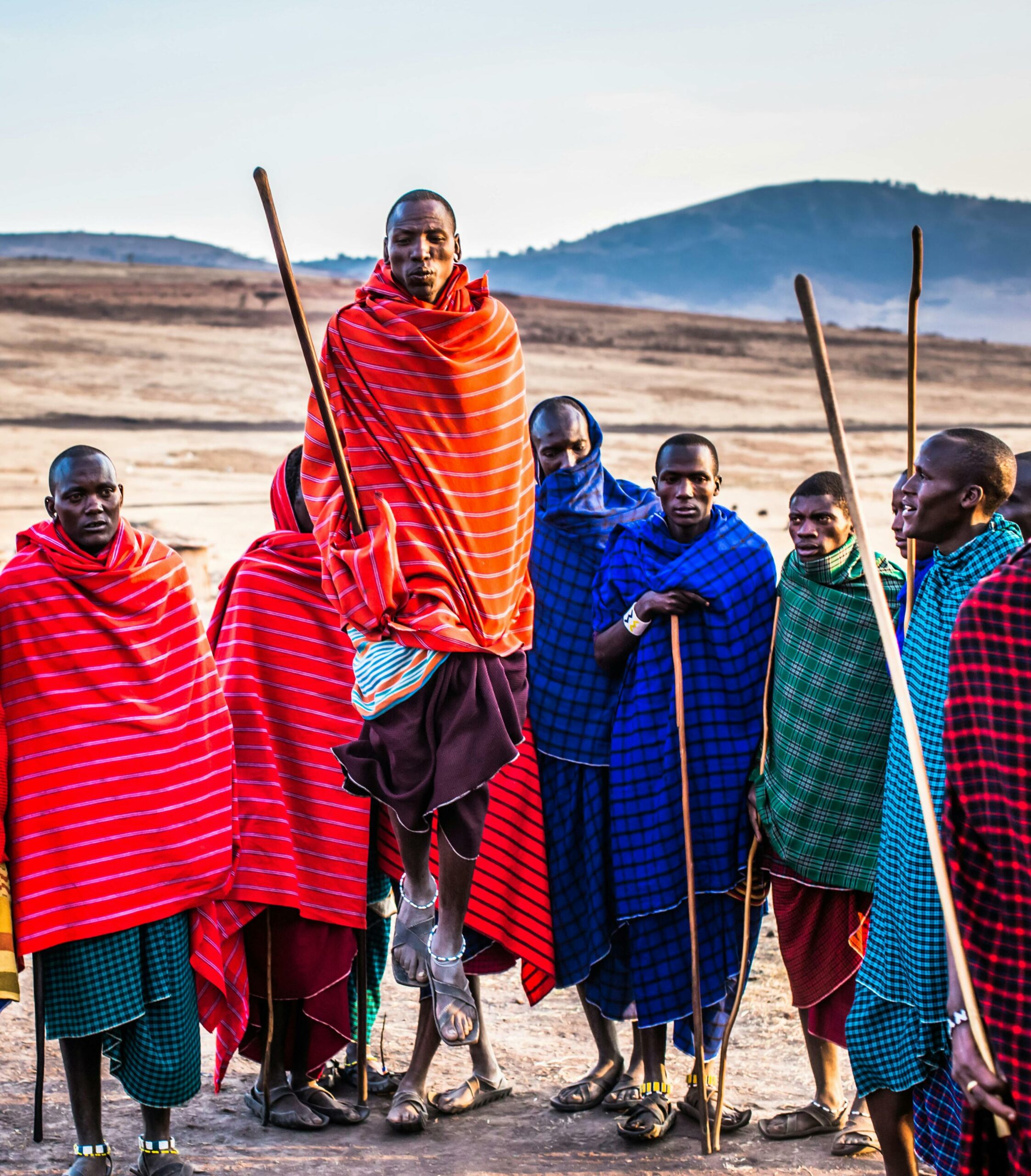
But this is only one way of seeing. In African Perspectives, life is a continuum.
In many African spiritual systems, the afterlife is not framed as a reward-based binary of heaven and hell. Instead, there is a cosmic continuity, a circle rather than a line. The physical and spiritual worlds are interwoven. The ancestors are not “gone”. They remain present in our lives, guiding, witnessing, and participating in the rhythms of community life.
Death is not the end; it is a transition. To live well is to maintain balance, with one’s family, with nature, with the community, and with the universe. Heaven, in this context, is not a faraway realm but a state of harmony achieved through right living and communal alignment. This worldview is deeply tied to Ubuntu: I am because we are. Umuntu ngumuntu ngabantu.
What, Then, Is Our Purpose on Earth?
Religions offer various answers:
• Christianity: To love God and neighbor, and to prepare for eternal life.
• Islam: To worship Allah and live a moral, upright life.
• Judaism: To walk in God’s ways and bring justice to the world.
• Buddhism and Hinduism: To grow in awareness, break the cycle of rebirth, and merge with the divine essence.
But again, many African Indigenous systems see purpose not as individual salvation but collective harmony. One’s life must serve the land, the community, and the spirit world. Success is measured not in personal gain or heavenly reward, but in how well one contributes to the web of life.
Even in secular philosophy, purpose is up for definition. Existential thinkers argue that life has no intrinsic meaning. We must create it. Others emphasize love, knowledge, creativity, and service as our higher callings.
If we reduce life to a waiting room for heaven, we risk missing the profound purpose embedded in the now. The Earth is not a test. It is a gift. Our relationships, our communities, our dreams and struggles, they are not distractions from heaven, but possibly glimpses of it.
Perhaps the real aspiration is not to “go to heaven” but to bring heaven here, in how we treat others, how we steward the earth, how we align with truth, justice, and love. In the African cosmological view, heaven is not a distant goal but a present possibility. When harmony is restored, between self, others, nature, and spirit, we are already participating in the divine.
Heaven may await. But so does purpose, here and now. Whether you believe in a celestial paradise or not, the deeper question remains: Are you living in a way that brings peace, balance, and meaning to the world around you?
Because perhaps our greatest task is not simply to arrive at heaven, but to become it.